
Boilers and Radiators
Heating is the bigger half of HVAC in Troy. NOAA's normals for the Albany airport put heating degree days at about 6,357 a year, close to nine times the cooling load. About 72 percent of homes in the city heat mainly with natural gas and about 22 percent with electricity, according to the Census figures for Troy.
The houses those systems sit in are old. More than half of Troy's homes were built in 1939 or earlier, and their heating has usually been replaced or converted at least once since. We work on what we find: steam boilers, hot water boilers feeding radiators or baseboard, gas furnaces, and heat pumps.
- Steam systems. One-pipe and two-pipe steam, the boiler, the low-water cutoff, the pressure control, main vents and radiator vents. Banging, spitting vents, cold radiators and uneven heat.
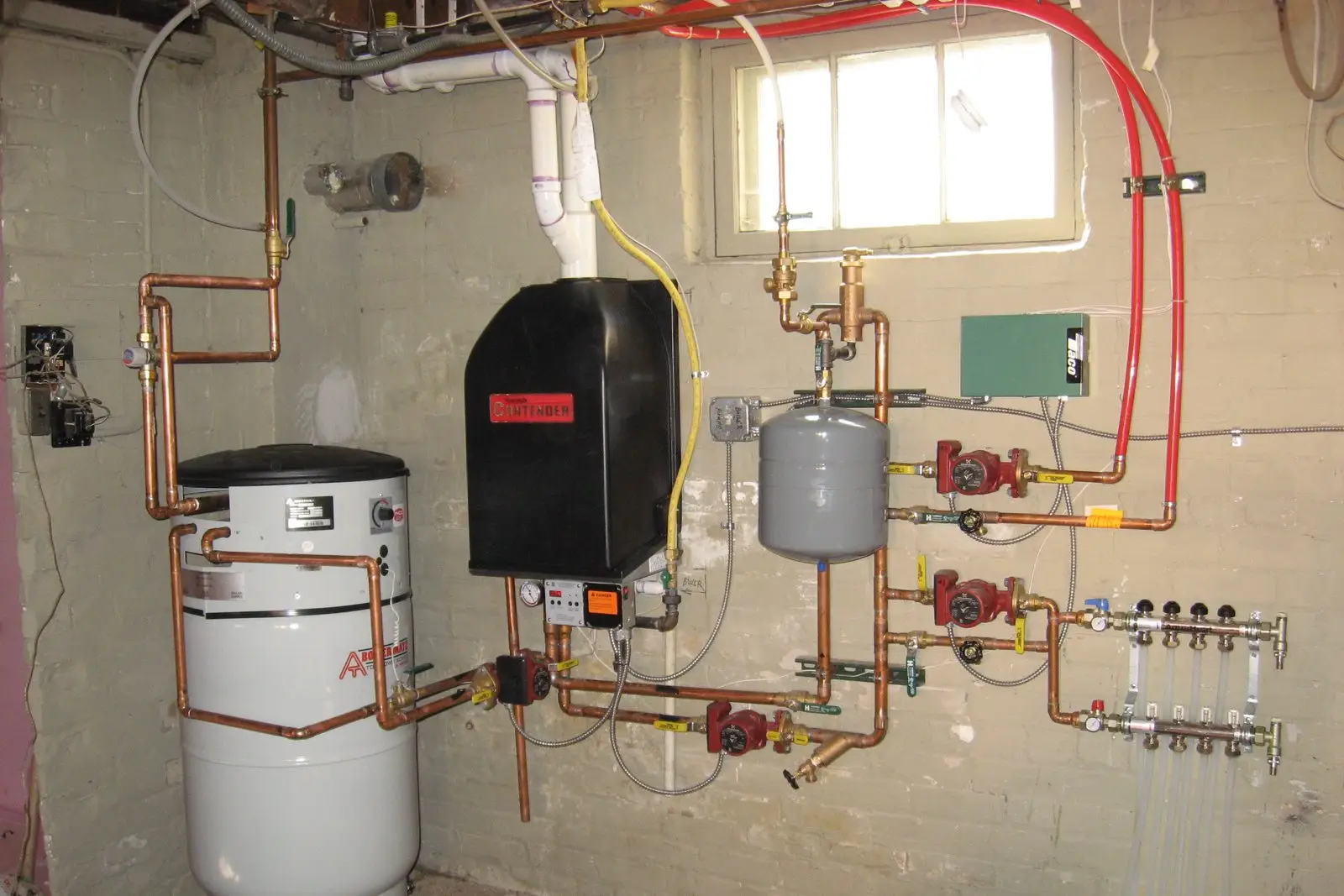
- Hot water systems. Circulator pumps, expansion tanks, relief valves, zone valves, air in the lines and pressure that keeps dropping.
- Radiators. Cast iron column radiators, baseboard, valves and vents.
Furnace Repair
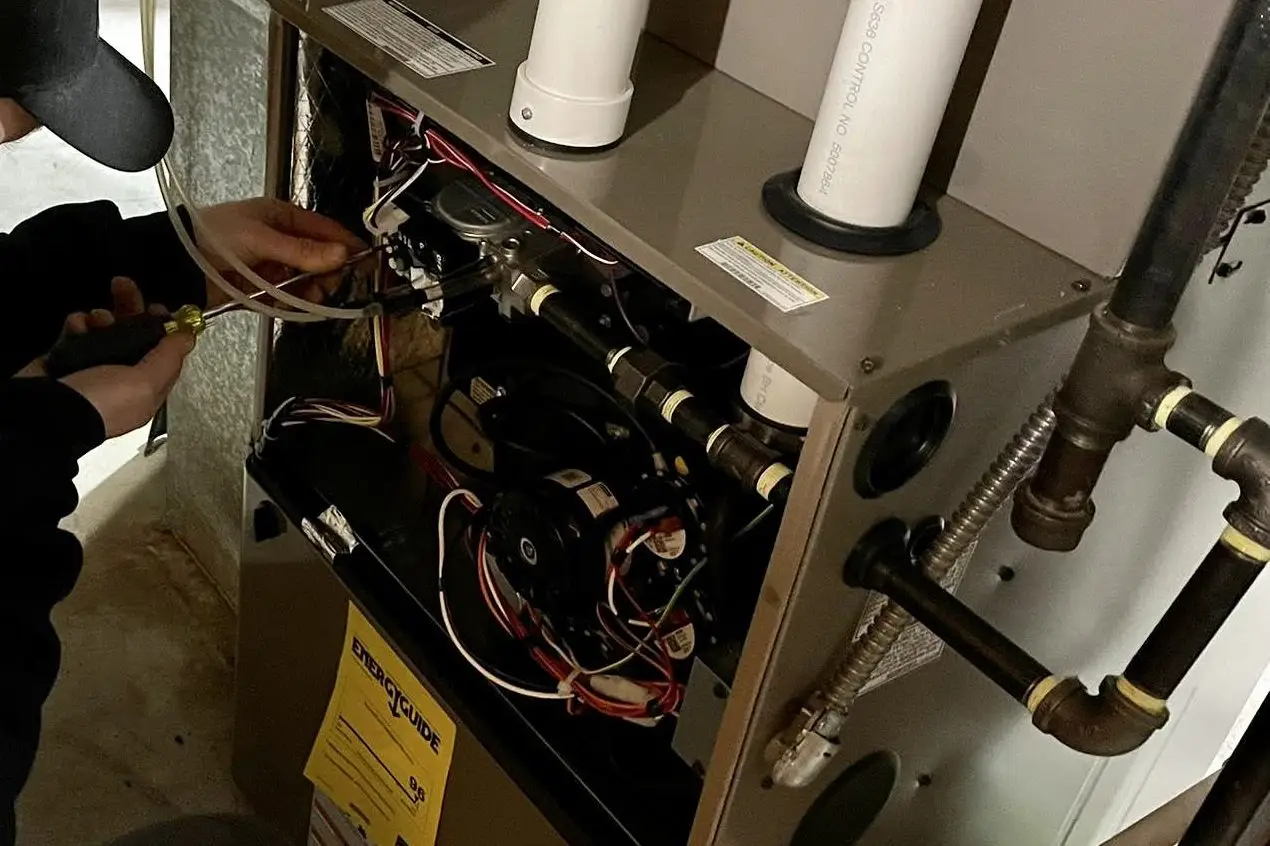
Gas furnaces heat many of Troy's newer homes and a lot of older ones that were converted from coal or oil years ago. The usual failures are the igniter, the flame sensor, the inducer motor, pressure switches, the blower motor and the control board. A furnace that lights and then shuts off, or blows cold air, usually has a safety control doing its job.
No heat in Troy? Call us.
Call (838) 884-0024Heat Pump Repair
We repair heat pumps and ductless units in heating mode: defrost problems, outdoor units that stay iced, low refrigerant, reversing valve trouble and backup heat that never comes on. A heat pump that struggles in the coldest weeks is not always broken. Sometimes the backup settings are wrong or the unit was never sized to carry the whole house.
Winter in Troy
January at the Albany airport averages a high of about 33 degrees and a low near 16, with around 7 nights a year at zero or below. Normal snowfall runs about 59 inches a season, mostly from December through March. The coldest reading on record is 28 below zero, on January 19, 1971, per the National Weather Service Albany climate records.
That is why heat pumps here are usually cold-climate models, or paired with a furnace or boiler. Energy Star's cold climate criteria require a heat pump carrying that label to keep at least 70 percent of its heating output at 5 degrees. For radiator homes, National Grid points to air-to-water heat pumps as an option, and its heat pump program page for upstate New York lists the current program terms.
Gas and Carbon Monoxide Safety
If you smell gas, leave the house first and call National Grid from outside. Their gas leak safety page lists the number. Every home with a gas furnace, boiler or water heater should have working carbon monoxide alarms. New York requires them in homes with fuel-burning appliances, and the CPSC carbon monoxide information center explains placement and testing.
Heating Repair Questions
Why is my furnace blowing cold air?
First, make sure the thermostat is set to Heat and the fan is on Auto. If the burners never light, the cause is often a dirty flame sensor, a failed igniter, a pressure switch or a clogged filter that tripped a safety switch. A furnace that lights and then shuts off may be overheating. Shut it off and call.
Why won't my furnace light when the fan runs?
The blower can run while the burners stay off if a safety control is blocking ignition. Common culprits are the igniter, the flame sensor, the inducer motor, a pressure switch or a blocked vent. Resetting it over and over can hide a real problem, so call instead.
Why does my furnace keep turning on and off?
Short cycling can come from a dirty flame sensor, a clogged filter causing overheating, a thermostat in a drafty spot or a furnace that is too big for the house. It wastes gas and wears parts, so have it looked at.
Why is my radiator not getting hot?
It depends on the system. In a steam system, a cold radiator usually means a stuck air vent, a valve that is not fully open, or a radiator that has lost its pitch back toward the pipe. In a hot water system, trapped air is the common cause, along with low system pressure. If bleeding does not fix a hot water radiator, call us.
How do I tell if I have steam or hot water heat?
Look at the boiler. A steam boiler has a sight glass that shows the water level and a pressure gauge that reads in small numbers. A hot water boiler has a gauge showing pressure and temperature, plus an expansion tank. Steam radiators have one pipe or a small vent on the side. Hot water radiators have two pipes and a bleed valve.
Why is my steam radiator banging?
Banging is water hammer. Steam runs into water that is sitting in a pipe or a radiator that has lost its slope. It can also come from a boiler with too much water or a valve left half open. It is common in old steam houses and it can usually be fixed.
Why does my boiler keep losing pressure?
In a hot water system, falling pressure usually means a leak somewhere in the piping or radiators, a failing relief valve, or a waterlogged expansion tank. A boiler that runs short on water can shut down on its own safety controls, so call.
Why is my heat pump not heating in cold weather?
Outdoor air holds less heat as it gets colder, so a heat pump's output drops on the coldest days. Many homes in the Capital Region pair a heat pump with a furnace or boiler for the coldest days. If the heat pump runs but the house keeps falling behind, it may be low on refrigerant, iced over, or set up without the right backup settings.
Why is my heat pump blowing cold air in winter?
A heat pump runs a defrost cycle to clear ice off the outdoor coil, and the air from the vents can feel cool for a few minutes while it does. If cold air keeps blowing after that, or the outdoor unit stays caked in ice, call us.
What should I do if I smell gas?
Leave the house and call National Grid's gas leak line from outside. Do not flip switches or use a phone inside. Call us once the utility has checked the house and cleared it.