
The Buildings Downtown
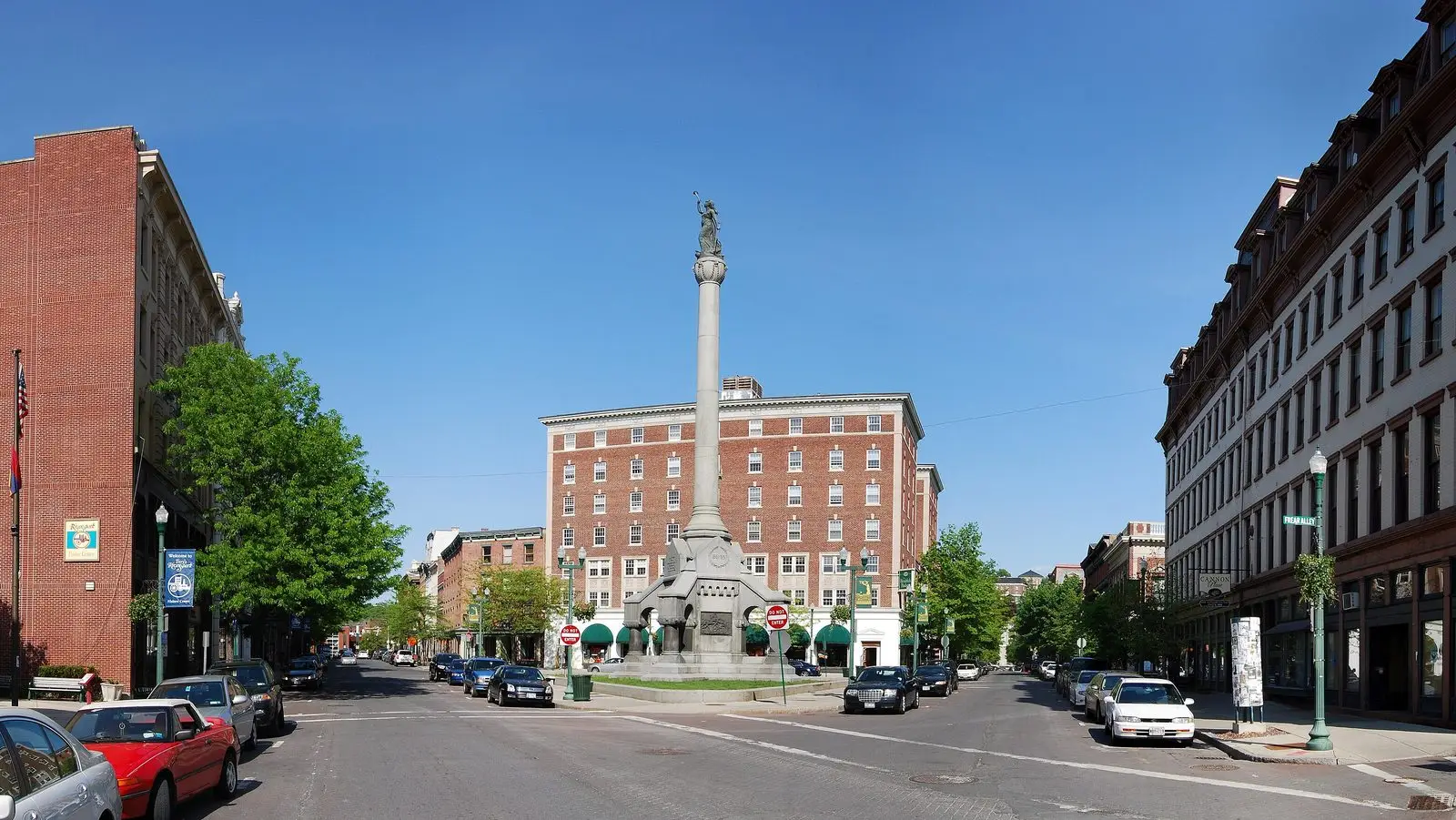
Downtown Troy is mostly one historic district. The Central Troy Historic District covers about 96 acres and close to 700 properties dating from the early 1800s to the mid-1900s. It went on the National Register in 1986, and a boundary expansion to the southeast was added in 2016.
Much of it was rebuilt after two big fires, one in 1820 and the Great Troy Fire of 1862. The Gurley Building on Fulton Street went back up within eight months of that second fire. The townhouses run through Federal, Greek Revival, Italianate, Second Empire and Gothic Revival styles, many on granite foundations. The Caldwell Apartments at State and Second streets, finished in 1907, was the city's first large apartment building.
The numbers match what you see on the street. In the census tract around Monument Square, the courthouse and the Music Hall, about 61 percent of homes were built in 1939 or earlier, and only about 1 in 10 is owner-occupied. Census figures for that tract show about half of homes there heat mainly with electricity and about 40 percent with gas, which fits a neighborhood of apartments over storefronts.
Washington Park and Little Italy
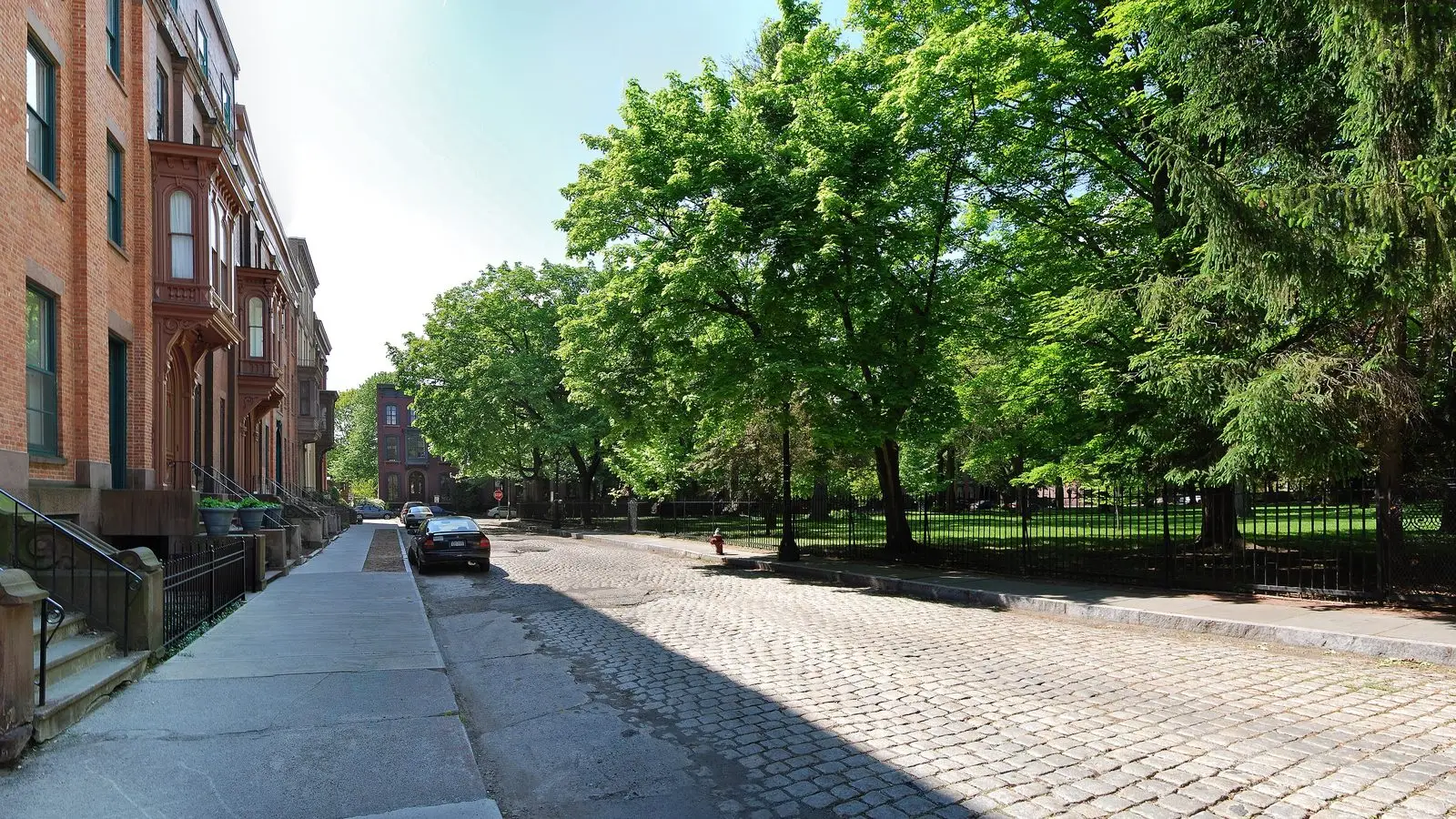
Washington Park was laid out in 1839 by six local businessmen on the model of a London residential square: rows of townhouses facing a fenced park kept for the people who live around it. It is one of only two private parks of its kind in New York State. South of it, Little Italy runs east to Fourth Street between Ida and Division streets, with blocks of 19th-century brick townhouses and brownstones.
This is some of the oldest housing in the city. In the census tract covering Washington Park and Little Italy, about 88 percent of homes were built in 1939 or earlier, and about 72 percent of units sit in buildings with two to four apartments. Gas is the main heating fuel in roughly 7 of 10 homes there.
Heating and Cooling in Old Downtown Buildings
Downtown work is shaped by the buildings. Shared brick party walls, deep narrow floor plans, high ceilings and no side yards make it hard to place equipment. An outdoor condenser often has to go on a flat roof, a rear yard the size of a parking space, or a bracket on a back wall. Ducts are rare in houses this age, so cooling is often ductless heads, one per room or floor, or a small-duct system threaded through closets.
Multi-unit buildings downtown come with every setup: one boiler for the whole building, a separate furnace per apartment, electric baseboard with window units, and newer heat pumps. We work on all of them and help owners sort out which unit feeds which apartment.
One more thing is changing downtown. National Grid is engineering a thermal energy network for downtown Troy that would draw geothermal heat from a borefield under Riverfront Park and deliver heating and cooling to buildings around it.
Heat or AC trouble downtown? Call.
Call (838) 884-0024Streets and Landmarks We Work Around
Our office is downtown, so these blocks are close by: River Street, Broadway, Congress Street, Second, Third and Fourth streets, State Street and Ferry Street. Monument Square, where Broadway, River Street and Second Street meet, has held the Soldiers and Sailors Monument since 1891, and on Saturdays from May to October the Troy Waterfront Farmers Market sets up there. The Troy Savings Bank Music Hall opened in 1875 and is a National Historic Landmark. US 4 runs through on River Street and the Third and Fourth Street pair, and NY 2 follows Congress and Ferry streets to the Congress Street Bridge.
Downtown Troy Questions
Can you put central air in a brownstone or rowhouse with no ducts?
Usually. Most downtown houses were built without ductwork, so the common choices are ductless wall units, a small-duct system run through closets and floors, or new ducts in an attic where one exists. The right answer depends on the floor plan and where an outdoor unit can sit.
Where does the outdoor unit go on a downtown rowhouse?
Common spots are a flat roof, a small rear yard or a wall bracket at the back of the building. Street-side placement is rare. Check with the City of Troy about permits and any historic district rules before any installation.
My building has one boiler for several apartments. Can each unit get its own heat?
It can be done. Options include zoning the existing boiler, adding separate systems per apartment, or adding ductless heat pumps that each tenant controls. The layout of the piping and the electric service decide what makes sense.